2413AFC032924 – Who has done this? – ← 😊 PODCAST LINK
The Road to Jerusalem Series #7
Read it online here, please. And please – when you visit there – use one of the social media links at the bottom of the page to share this post. Thank you! And remember, we now have a READER VIEW available, so share this link or this email often.
Do you know someone who enjoys Bible study, or who might like to read this? Ask them to email us or to subscribe on our blog-site.
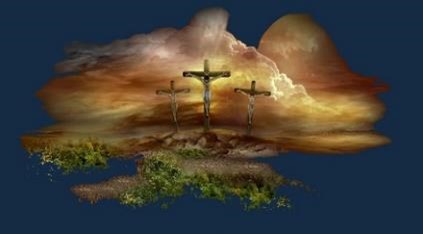 Today is Good Friday. Today I am thinking about what happened on Good Friday in Jesus’ life. I am thinking about how and why it happened. I am thinking how you, how I, how we might have connections to that moment of Jesus’ crucifixion. It is not a pleasant subject, but it has been laid on my heart since before Lent began to cover this topic, the connection between Love and human depravity.
I have stated previously that Jesus certainly was not the first to be crucified and definitely not the last. There is evidence of crucifixions and other forms of torture going back thousands of years – at least as far back as the sixth century BC – and they continued to be widespread until about the fourth century AD. Crucifixion is execution by torture. (← Check it out!) The process of dying can last for days in some instances. It is a method of execution specifically designed for maximizing pain while dehumanizing the victim. Jesus died in great pain in the dark, in the cold, totally alone, deprived of freedom, dignity, and even – at the end – without even the company of his Father. It is death by blood loss and suffocation so that the life force of both the body and the life force of Spirit are spilled out completely. But, despite all that, he died with Faith, Hope, and Love – even for us (etiam pro nobis). He died for you, for me, for us in F.A.I.T.H., knowing that God would accept his Sacrifice, knowing that his Perfect Sacrifice was the only hope for reconciliation for the entire world, and he held that faith and hope because he gave up everything he was because of Love for God and for us. He stretched out his hands between Heaven and Earth, to embrace a tortuous death, and gave us back our humanity, which is our Oneness with our Creator.
Torture is a gruesome, evil, deliberate act of inflicting pain and suffering for the purpose of coercing, terrorizing, or punishing enemies. Sometimes it is also a form of personal 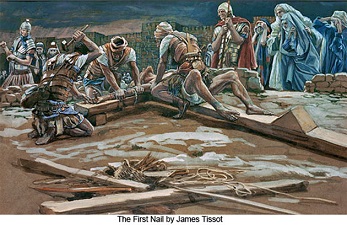 gratification. My personal belief is that the Crucifixion Squads the Romans used were comprised of men – usually a team of four soldiers and one Centurion – who enjoyed their work immensely. Execution by torture is mentioned in many ancient histories of empires and nations including some in the Bible. Crucifixion is one of the cruelest forms of execution. There are others that fall into that category of extreme cruelty, but they are so gruesome I cannot mention them here. There is no civilization, no nation, or no empire that has not employed torture at some time in its history. Does that seem remarkable, or odd, or inaccurate? It is none of those things.
All of us have the capacity for inhumane treatment of others. That is why inhumane acts are so prevalent throughout history, even today in Mass shootings and in suicide by cop. I’m not really a history freak, but I do explore history a lot, and in every history of humankind there are examples of torture. It’s not always horrific like crucifixion, but it is always dehumanizing. That is the ultimate purpose of torture, to dehumanize an enemy whether it is a single person, a class of persons (like slaves or enemy soldiers for example), or an entire nation (like a pogrom – so-called “ethnic cleansing”). Think of it: Uganda, Rwanda, Eastern Europe – Guantanamo, Russia, China, Japan, and the United States (on “foreign” soil). There was horrific torture in all of those places in the 20th century!
“What makes you think that’s part of my make-up?” you ask. Beloved, we are human. We can get angry and strike in anger. We can hold a grudge. (↔ Learning Link) We can think hateful thoughts. We can get carried away with punishment, mistaking it for “correction.” We can be unloving and unforgiving. We can curse a loved one. We can strike out at another for the most foolish reasons. “But that is not as atrocious as torture! It’s just that we are human.” Look at what Jesus said about many other things that are “merely human.”
“You have heard it said that …” In Matthew 5:21-48, Jesus tells us that fulfilling the Law isn’t the answer. Hating your brother is equivalent to murder. Lusting after someone is equivalent to adultery. Lusting after a certain thing is idolatry. Swearing by or about anything is blasphemy which comes from Satan, and is not from God. Only God-given self-control centered in compassionate commitment to morality prevents us from becoming brutal, ghastly, and capable of being inhumane. It is possible, even probable, that most earthlings committed to morality will never, ever do anything as monstrously cruel as torturing another earthling for any reason; but the germ for it is there in our sinfulness, and it is a mark of meekness to recognize it. It is an appalling aspect of human nature. Jesus knew that. He knew what would happen to him. He knowingly, willingly, totally surrendered to ignominious, cruel, tortuous execution on a cross. He did that because of what has been behind every single topic we’ve covered this Lent. He did it for Love.
“Greater love has no man than this, …” Look at John 15:9-17. Click on the link and read the passage. That is what was at the core of every study we have submitted in the Lenten  Series. God is Love and that Love is perfected in Jesus’ sacrifice and conveyed to us in his Resurrection through our participation in the Holy Eucharist. It is that Love, and only that Love, which makes being a humane earthling possible. Only because of the Love of God, manifested in Christ Jesus, can we be caring, kind, gentle, meek, humble, compassionate, charitable, benevolent, good, and holy. “There is no other way?” you ask. No, there is no other way. Not so interested in being a Christian because religions bum you out? It doesn’t matter. It is still because of God’s Love and Christ’s death and Resurrection that you and I have the capacity to be all those wonderful, Godly things. “How could there have been good people who were wonderfully humane before Christ, and how can people today be all of those things and more without being Christians?” Because of God’s Covenant of Love which begins and ends in the Eternal Love of God given to us in Jesus by the ministry of the Holy Spirit. It is Love that saves me, saves you, saves us from the evil that has consumed every soul that devised and committed any kind of sin – including torture. Whatever goodness might manifest in others who are not Christians comes from the Manifest Grace of God in Christ Jesus. That is why Christ commands us to Love one another (↔ Music Link). Through The Word, we are present in his sacrifice 24/7/365. (↔ Music Link) Live and Love as He Lives and Loves, and we will know his return.
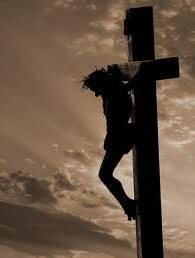 When you listen to the reading of The Passion, think of Love. It is the Greatest Love Story Ever Told. (↔ Music Link)
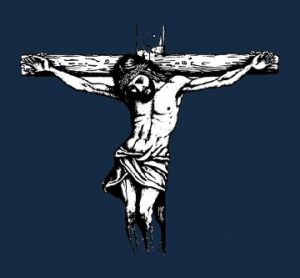
Look at him. He did that for us. He did all of that for all of us. He did it because he Loves us so much more than we can possibly comprehend. He can do that because he alone is Love.
“If today you hear is voice,” (↔ Music Link) Jesus is inviting you to share his Joy. If you have not accepted Christ as your personal savior, pray this short prayer from your heart and Jesus will answer it. If you already know the Lord and have found Peace and Joy in his presence, pray this prayer to recommit and reconsecrate your life to him, so that your J.O.Y. may be complete.
Jesus, I realize now that you are God’s Only Begotten Son. I know you chose to die in my place for the forgiveness of my sins. Thank you for loving me so much. I want to love you that much, too, and I claim you as my personal Savior. I give you my heart, my life, my soul, my all. I ask you to be in my life forever. Bless me with your Presence, and send your Holy Spirit to pray with and for me so my faith in you becomes permanent and real. I accept your love, your forgiveness, and your Salvation. AMEN
Remember, saying this prayer or any other prayer will not save us. Only believing in Jesus Christ, His finished work on the Cross is there and real and done for us, and his Resurrection into Glory can save us from the wages of our sins. Who has done this? WE have joined the crowd that cried out crucify him crucify him!, and we do so with every unrepented sin. Amazingly, God even blesses unrepentant sinners – they are not our enemies; ha-Satan and his minions are everyone’s enemies, but on an earthling plane just remember Matthew 5:44-45 – 44 But I say to you, Love your enemies and pray for those who persecute you, 45 so that you may be children of your Father in heaven; for he makes his sun rise on the evil and on the good, and sends rain on the righteous and on the unrighteous. If they can see the Jesus in us, it is because we can see Jesus in them. Who has done this? Us. No? Then we must keep trying to let Jesus to do this in us because he did this for us.
Whatever, whenever, wherever, whoever, however,, forever —
at your service, Belovéd!
Please pray with us here at Share-a-Prayer.
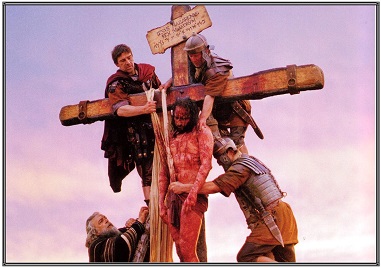
We did that. We were there.
Unless otherwise indicated, all scripture passages are from the New Revised Standard Version Catholic Edition (NRSVCE) New Revised Standard Version Bible: Catholic Edition, copyright © 1989, 1993 the Division of Christian Education of the National Council of the Churches of Christ in the United States of America. Used by permission. All rights reserved.
Biblical languages inserts from Bible Hub (Bible Hub: Search, Read, Study the Bible in Many Languages) Visit at http://biblehub.com

Aloha Friday Messages by Charles O. Todd, III is licensed under a Creative Commons Attribution-ShareAlike 3.0 Unported License

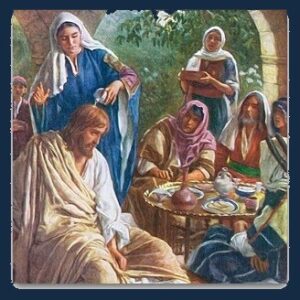 Journey to Jerusalem. Jesus was in Bethany, close to Bethphage Βηθφαγή, (Béthphagé) {bayth-fag-ay’} which is from an Aramaic word meaning “Place of new – or unripe – figs” near the base of the Mount of Olives. While reclined at table (chairs were not used as in this image), an unnamed woman anoints him with nard. As the lovely fragrance fills the air, some of the guests complain it is too extravagant. Jesus quiets them with yet another reference to his impending Sacrifice: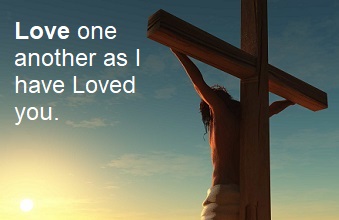
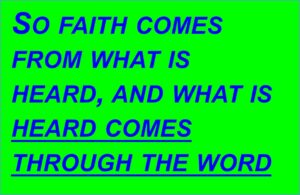 the word of Christ. (My underlining). We see those words, “Everyone who calls on the name of the Lord,” and remember “Not everyone who says to me, ‘Lord, Lord,’ will enter the kingdom of heaven, but only the one who does the will of my Father in heaven.” (See
  and doable goal, but in order to achieve that goal the primary objective is to do justice, and to love kindness, and to walk humbly with our God. (See
  understood it until after his Ascension, and even then “some doubted.” (See
  darkness. 47 I do not judge anyone who hears my words and does not keep them, for I came not to judge the world, but to save the world. 48 The one who rejects me and does not receive my word has a judge; on the last day the word that I have spoken will serve as judge, 49 for I have not spoken on my own, but the Father who sent me has himself given me a commandment about what to say and what to speak. 50 And I know that his commandment is eternal life. [YOLO-F] What I speak, therefore, I speak just as the Father has told me.” WE know this, and still, sometimes, we forget to listen. When that Day of Reward comes and on the last day the word that I have spoken will serve as judge, and we will perhaps ask, “Why didn’t we listen?”
 nothing we can to about our state of sinfulness – it is inherent in our nature; however, there is something we can do about our sins. The first thing we can do is to resist sin and the desire to be tempted. In our
  a crime, we can also be punished, and our punishment is designed to help us – perhaps even make us – lament our foolishness. Perhaps the most foolish sin of all is to believe that we cannot be caught out in our sin because no one will find out about it. Perhaps you recall “The fool says in his heart ‘There is no God.’” (See
  in Christ, and not by doing the works of the law, because no one will be justified by the works of the law. 17 But if, in our effort to be justified in Christ, we ourselves have been found to be sinners, is Christ then a servant of sin? Certainly not! 18 But if I build up again the very things that I once tore down, then I demonstrate that I am a transgressor. 19 For through the law I died to the law, so that I might live to God. I have been crucified with Christ; 20 and it is no longer I who live, but it is Christ who lives in me. And the life I now live in the flesh I live by faith in the Son of God, who loved me and gave himself for me.
 not condemned; but those who do not believe are condemned already, because they have not believed in the name of the only Son of God. 19 And this is the judgment, that the light has come into the world, and people loved darkness rather than light because their deeds were evil.” Yes, it’s the same old story of devastation, lamentation, salvation, and condemnation. But there’s the
  omnipresent, omnibenevolent, and with good reason expects us to know that. I say “with good reason” because we are created in his image and likeness, and therefore his own beloved creatures among all of his Creation. “Creature? How come you call me a creature when I am a child of God?” Go to Chapter 1, verse 12 of John to
  further insight into the Nature of God to be able to perceive his role in our salvation through Christ Jesus? Why do we preach “Christ crucified?” It was the death of Christ which accomplished our Salvation. It was the Resurrection of Christ which assured our reunion with God at the Day of Reward. If we choose – again choose – to make sense of that or to see proof of that, then that Old Serpent is having his way with us … again. God does not condemn those who have chosen to trust, Love and Obey him (See
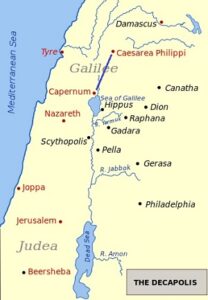
 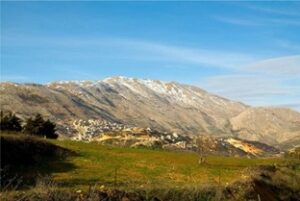 Jesus, of course, knew what was coming, but I can only imagine how the three Apostles must have reacted. In chapter 8 of the Gospel of Mark, Jesus and the Apostles are near Cæsarea Philippi. A very impressive mountain is nearby, Mount Herman, and is usually designated as the site of the Transfiguration of Christ. At an altitude of 9,230 feet, it is nearly three times higher than any other mountain in the region. Our Scripture says that they “went up a high mountain,” so perhaps not all the way to the top. Nonetheless, you can see that it must have been a long and steep hike! I used to think this took place at night, but it would be all the more difficult then. We can speculate, perhaps, that the Transfiguration and the hike back occurred after dusk, but there’s no way of truly knowing. We do know that it was at or near Cæsarea Philippi that Jesus asked the Apostles, “Who do people say that the Son of Man is?” There follows the astounding profession of faith from The Apostle Peter, “You are the Messiah, the Son of the living God.” We see this in
  and the scribes, and be killed, and after three days rise again.” This is stated in
  Jesus was and is The Perfect
 in a contract, the establishment sets the requirements and rules and measures the workers’ compliance. The workers agree to adhere to the stipulations of the contract. In biblical terms, a covenant is a shared agreement between God and his chosen creations, namely, those who solemnly promise through their sworn oath to live according to the qualifications set by God. God sets forth promises regarding his future actions. He spells out the terms of those promises and the rewards (whether positive or negative) for compliance. The terms of a covenant between God and his chosen ones require a commitment of one’s life to the Covenant Maker. The Covenant Maker gives a
 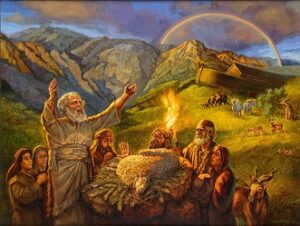 acceptance of the covenant. I’ll take a quote from Fr. Mike Schmitz here: “At the heart of religion is worship, and the heart of worship is sacrifice.” God promises to give us his Life in exchange for our lives. In the covenant set with Noah, God promised the waters shall never again become a flood to destroy all flesh. Once was enough because enough was completely effective! On Noah’s part, the Symbolon of the covenant was the sacred sacrifice of the conserved animals. On God’s part, it was the rainbow. (Incidentally, folks, God wants his rainbow back and used for what he intended it!) what we really need is a source of learning about this covenant. That’s why we turn to the B.I.B.L.E., the teaching of God in his Church, and the traditions handed down to us by the Apostles.
 and only 8 people acted on those warnings. Third, it did not just “rain cats and dogs” (they were in the Ark 😉). You know the story – it rained HARD for 40 days and nights, and “all the fountains of the great deep burst forth, and the windows of the heavens were opened” so that the Earth was covered in water. Check out
  we know?
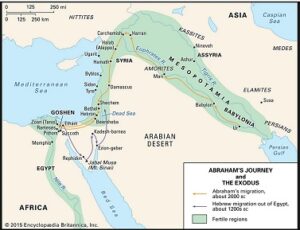 book of the Bible that many people never read, and those who do mostly skip through it. It’s full of rules, precepts, and laws about Ritual Sacrifices. It is the middle book of the Pentateuch, the first 5 books of the Torah and also of our Bible. It is called Leviticus because most of it deals with the tribe of the Levites who have the responsibility for the Priestly service for the Israelites. Honestly, the text really turns some people off. There’s a lot of blood, a lot of sacrificial slaughter, a lot more blood, and endless fire and smoke from the Altar. In addition, there are lots of “guidelines” (significant rules we would today call MYOB-rules) that are designed to guide a thoroughly idol-oriented, pantheistic aggregation of people who have been enslaved for 10 generations into a strong, monotheistic, and cohesive society that can stand on its own as a nation in the midst of really dreadful nations like the Assyrians, Philistines, and the Amalekites. On 21st century maps Assyria would be the region of northern Iraq, northwestern Iran, southeastern Turkey, and eastern Syria. Some people consider the descendants of the Amalekites and Philistines to be Palestinians because in the Bible, those nations vigorously opposed the seizure of Canaan as the Promised Land of the Hebrews. As we well know, that conflict is still raging after 3,300 years, and there’s only one end in sight: The Return of Christ at the End of the Age of the Church. I agree with The Apostle Paul who agreed with Jesus that the End of the Age could be any day now. I think it’s safe to state that that process will be pretty messy for anyone who is unprepared; but, prepared for what, and how?
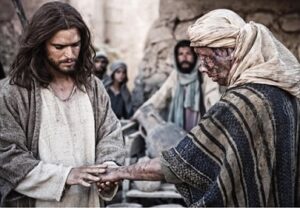 clean!” In that passage in the Gospel of Mark, Jesus is described as being “moved with compassion.” The
 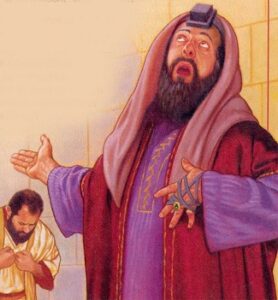 I said, “I will confess my transgressions to the Lord,” and you forgave the guilt of my sin. Selah When I hear that passage I think of the Pharisee and the Publican (See
 “How can a supposedly loving God allow this to happen?” That question is especially relevant when innocents suffer at the hands of great evil as when parents murder their own children (especially when they are unborn children), or when sociopathic killers torture and murder people. One I see quite often these days relates to ISIS and Hamas and the horrific and egregious acts of terror they commit. How can people, in the name of a god (whom they call Allah), do those things? As I have said here before, these acts are committed by heretics, and Allah is not Jehovah. At some points in history just about every major religious – and even antireligious – group has committed atrocities. Whoever the perpetrators are, it is still atrocious, still evil, and still a choice. We are not commanded to annihilate the earthlings that are different from us. We are commanded to love and forgive them.
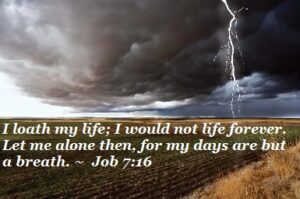 choice, and our choice should be guided by Christ’s Law of Love. Still, enduring evil and suffering – even if we do so within the guidelines of Scripture – is not easy, and we nevertheless want answers. Let’s return to Job and see how he was answered.
 and
and