2434AFC082324 – Choose to Be Chosen – ← 😊 PODCAST LINK
Read it online here, please. And please – when you visit there – use one of the social media links at the bottom of the page to share this post. Thank you! And remember, we now have a READER VIEW available, so share this link or this email often.
Do you know someone who enjoys Bible study, or who might like to read this? Ask them to email us or to subscribe on our blog-site.

Johsua 24:1-18 {excerpts only} – Joshua gathered together all the tribes of Israel at Shechem … Joshua addressed all the people: “If it does not please you to serve the LORD, decide [choose*] today whom you will serve, the gods your fathers served beyond the River or the gods of the Amorites in whose country you are now dwelling. As for me and my household, we will serve the LORD. … But the people answered, “Far be it from us to forsake the LORD for the service of other gods. … Therefore we also will serve the LORD, for he is our God.”
* : bachar choose, choice, chosen, selected from the choice ones
Psalm 34:16-17 –
16 The face of the Lord is against evildoers,
to cut off the remembrance of them from the earth.
17 When the righteous cry for help, the Lord hears,
and rescues them from all their troubles.
Ephesians 5:21 – 21 Be subject to one another out of reverence for Christ.
John 6:63-69 – 63 It is the spirit that gives life; the flesh is useless. The words that I have spoken to you are spirit and life. 64 But among you there are some who do not believe.” For Jesus knew from the first who were the ones that did not believe, and who was the one that would betray him. 65 And he said, “For this reason I have told you that no one can come to me unless it is granted by the Father.”
66 Because of this many of his disciples turned back and no longer went about with him. 67 So Jesus asked the twelve, “Do you also wish to go away?” 68 Simon Peter answered him, “Lord, to whom can we go? You have the words of eternal life. 69 We have come to believe and know that you are the Holy One of God.”
Blessed be the God and Father of our Lord Jesus Christ! By his great mercy he has given us a new birth into a living hope through the resurrection of Jesus Christ from the dead. Ah, Belovéd, my heart is harking back to those days of grade school at what was then called Charles A. Bradley Elementary School. There were some great times there. I remember one of the really “coveted” distinctions was to be selected to be on the Honor Guard. There were about a dozen kids chosen to march shuffle-style from the Office to the flag pole and to raise the flag and then lead in reciting the Pledge of Allegiance. At the end of the day we marched out and respectfully lowered the flag, properly folded it, and took it back to the office. There were other episodes of choosing that were not so honorable – like standing in a circle and waiting to be chosen to play on one of the two Kick Ball Teams during Recess. Great athlete that I have never been, I was usually among the last – or often the last. When my name was finally called, one of the guys in my class usually said, “God Todd! What a clod!” Sometimes being chosen is pretty gratifying; sometimes it is not. In many instances being chosen requires having to do or be something or someone that serves another – like kickball for example – you have to be able to kick, to run, to score, to catch, and to throw accurately so that your team wins the contest (which to me always seemed mainly pointless anyway). Being chosen in a Covenant Relationship is a lot more complicated and demanding. Consider the history of Israel.
You will recall that God chose Abram and sent him off on a very long trek through very hostile territory. The purpose of the sojourn was to acquaint Abram with the land God had set aside for a group of earthlings that wouldn’t even be identifiable for hundreds of years later – about 400 years, actually. That was when God chose Moses to go to Egypt where his chosen earthlings had been multiplying and – well, let’s call it “incubating” – for that 400 years. Once Moses had gotten them out of the clutches of Pharoah and their slavery there, the Lord chose Moses to convey this message: Deuteronomy 14:2 – 2 For you are a people holy to the Lord your God; it is you the Lord has chosen out of all the peoples on earth to be his people, his treasured possession. Why did God do that? it might sound trite or flippant, but “God only knows.” He did what he did because he wanted to do it. He chose the weakest, the most abused, the most fickle descendants of the first decent man (Abram) he found after the Great Deluge and called them to be “a light to the nations,” the singular Nation that would show how God as the source of Perfect Integrity, Endless Mercy, Everlasting Love, And Eternal Salvation. EVERY nation would be able to see how great El Shaddai-Olam is by how blessed Israel became. All they had to do was love and obey him so that they, and everyone in the World, would know as in Isaiah 44:6 –
6 Thus says the Lord, the King of Israel,
and his Redeemer, the Lord of hosts:
I am the first and I am the last;
besides me there is no God.
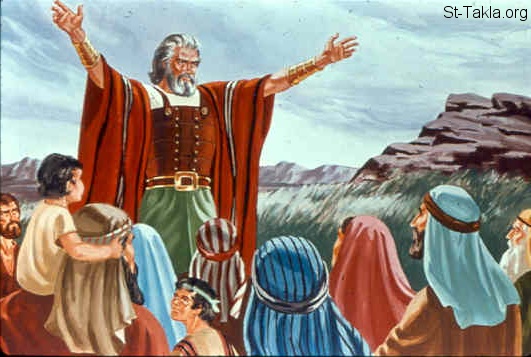
Now, let’s take a look at the chopped-up Key Verse selection from Joshua 24. Here are the People of God’s Own Choosing, and Joshua is telling them they have already proven themselves to be fickle, selfish, and prone to do whatever their wicked neighbors do so that The Chosen will be more like the eliminated Nations: If it does not please you to serve the LORD, decide [choose*] today whom you will serve, the gods your fathers served beyond the River or the gods of the Amorites in whose country you are now dwelling. As for me and my household, we will serve the LORD. And what did the people reply? “Far be it from us to forsake the LORD for the service of other gods. … Therefore we also will serve the LORD, for he is our God.” Of course we cannot know, but I do believe that God himself said quietly, “We’ll see about that,” because he knew full well they would betray him over, and over, and over again.
Now, aren’t we also like that? do we not profess to know him, to love him, to serve him in his perpetual, deep-and-wide (↔ Music Link) Conventional Love and Grace? When I contemplate that, I rejoice because How can I keep from singing? (↔ Music Link) I say again How can I keep from singing? (↔ ANOTHER Music Link) And still, I know that even as I choose God to give Primacy to, I will fail and betray him through disobedience, and the desiring of no-gods, idolatry that is adultery in the Eyes of the Lord.
Most of the time this happens when we selfishly put our own wants ahead of other’s needs: “I want what I want when I want it,” and, “I know what you want, Lord, but I don’t want that because I’d rather have something (or perhaps someone) of my own choosing.” In the writing of the Prophets Jeremiah, Isaiah, and Ezekiel (and in hundreds of other place in the B.I.B.L.E.) God addresses the topic of idols and idolatry. He calls them “no-gods,” and says through the Prophet Isaiah in Isaiah 44:14-17 – 14 He cuts down cedars or chooses a holm tree or an oak and lets it grow strong among the trees of the forest. He plants a cedar and the rain nourishes it. 15 Then it can be used as fuel. Part of it he takes and warms himself; he kindles a fire and bakes bread. Then he makes a god and worships it, makes it a carved image and bows down before it. 16 Half of it he burns in the fire; over this half he roasts meat, eats it and is satisfied. He also warms himself and says, “Ah, I am warm, I can feel the fire!” 17 The rest of it he makes into a god, his idol, bows down to it and worships it; he prays to it and says, “Save me, for you are my god!” We, who claim to Love and serve the Lord, the God of Abraham, Isaac and Jacob, the God of our Fathers, (↔ Music Link) [1]
[1] “God of our Fathers” is the National Hymn. Daniel C. Roberts wrote the lyrics in 1876, the Centennial of the United States. The accompaniment in this version was written later by George W. Warren in 1892. It has invoked strong sentiments of Patriotism ever since. Would to God that “We, The People of The United States of America” would learn to sing, take up, and live the lyrics in this majestic poem! **↓
[1] the God who emptied himself and came to be with us as Emmanuel, we take cars, drugs, celebrities, gizmos and doodads, makeup, toothpaste, garments, and any other material or temporal thing we value and we make them into our gods, saying, “This will make my life so-o-o-o much better.” All the while we are saying, “God does not see, he does not care, I can get back to him and he’ll forgive me, but right now … yeah, I’m good with all these things and persons I have acquired.” Don’t we often choose what is the worst of us instead of choosing God Who Is the Best of us?
Every time we act in ways that show we are attempting to exalt ourselves at the expense of others, we are making ourselves to be our idols, making ourselves to be no-gods. No-gods our powerless. They cannot breathe because no Breath is within them, they cannot walk, or move, they cannot speak and so cannot answer, they have to Life, and so cannot give anything to satisfy our wants, much less our needs. When we make other persons (including us), places, things, ideas, or even spirits more important than the One, True, Only, Eternal God Almighty who created us and the entire universe (but is not the Universe), then we have manufactured one (or more) of those no-gods. Here is a little caveat about those no-gods: The usually are inhabited by demonic spirits – yep, persons, places, things, and ideas (I’m thinking politics at this very moment) can be the intermediary for demons. Recall the words of The Apostle Paul in 1 Timothy 4:1-2 – 1 Now the Spirit expressly says that in later [or last] times some will renounce the faith by paying attention to deceitful spirits and teachings of demons, 2 through the hypocrisy of liars whose consciences are seared with a hot iron. THESE earthlings should be easily and clearly recognizable as not-gods, and yet our country, founded on Christian principles, is divided over two people with very different claims to the power and integrity of their Christian faith. isn’t just possible that neither one of them is right? Who among us sees a leader who can be said is compliant with Ephesians 5:21 – 21 Be subject to one another out of reverence for Christ? And not just in America, but in any government anywhere in the World? Can any such leader be the one chosen by God?
The stunning answer is yes. Throughout the history of the People of Israel, God chose Nations who had violent opposition to Israel. He chose them to correct their apostasy – their total rejection of their heritage at the chosen people, or as The Apostle Peter put it in 1 Peter 2:9 – 9 But you are a chosen race, a royal priesthood, a holy nation, God’s own people**, in order that you may proclaim the mighty acts of him who called you out of darkness into his marvelous light.
**Greek a people for his possession peripoiēsin preservation, acquisition, acquiring, obtaining, possessing, possession, ownership; ” ‘a making to remain over and above‘; hence, ‘preservation; preservation for one’s self; acquisition; the thing acquired, or a possession’ “
Now we here in America are looking at a situation where there will be even deeper division among our citizens, where too few of us will be subject to one another out of reverence for Christ. In the past, God has given The Chosen great blessings for their Love and Obedience. When “humanity” chosen or not, failed to honor his Primacy, this is the sort of message he gave us – all of us!
Proverbs 1:25-29 –
25 and because you have ignored all my counsel
and would have none of my reproof,
26 I also will laugh at your calamity;
I will mock when panic strikes you,
27 when panic strikes you like a storm,
and your calamity comes like a whirlwind,
when distress and anguish come upon you.
28 Then they will call upon me, but I will not answer;
they will seek me diligently, but will not find me.
29 Because they hated knowledge
and did not choose the fear of the Lord
ʻŌmea, please, choose to be The Chosen People, remember the Word the Lord has given us in Jeremiah 9:23-24 – 23 Thus says the Lord: Do not let the wise boast in their wisdom, do not let the mighty boast in their might, do not let the wealthy boast in their wealth; 24 but let those who boast, boast in this, that they understand and know me, that I am the Lord; I act with steadfast love, justice, and righteousness in the earth, for in these things I delight, says the Lord. The wise, the mighty, the wealthy – and all the other no-gods – are like the fakey fans in Proverbs 15:12 –
12 Scoffers do not like to be rebuked;
they will not go to the wise. It is so simple to remember because our Lord God tells us so many times, like this time: Psalm 34:16-17 –
16 The face of the Lord is against evildoers,
to cut off the remembrance of them from the earth.
17 When the righteous cry for help, the Lord hears,
and rescues them from all their troubles.
NO no-gods can do that, absolutely none. And here is the result of when the Righteous call out: John 6:63-69 – 63 It is the spirit that gives life; the flesh is useless. The words that I have spoken to you are spirit and life. 64 But among you there are some who do not believe.” For Jesus knew from the first who were the ones that did not believe, and who was the one that would betray him. 65 And he said, “For this reason I have told you that no one can come to me unless it is granted by the Father.”
Choose to be chosen by the Lord, God of Hosts, the first, the last, the only God who deposes all the no-gods with a single breath of his mouth. For this we are joyfully inspired to give Praise to the Lord (↔ Music Link) because of his Absolutely Perfect Plan! Blesséd be God in all his Angels and his Saints chose in righteousness “before the foundation of the world to be holy and blameless before him in love. He destined us for adoption as his children through Jesus Christ, according to the good pleasure of his will, to the praise of his glorious grace that he freely bestowed on us in the Beloved. (See Ephesians 1:3-14 – seriously Adelphos, read it). we must understand that God will give you what we ask for but will base it on our actions, not our words. And this is why I close every message with my pledge to be subject to each and all of you in, and through, and because of being chosen in Christ Jesus for a life of Full-Time Christian Service. I tell you each time …
Whatever, whenever, wherever, whoever, however, if ever, forever —
at your service, Belovéd!
Please pray for me that I can choose to be your servant. (↔ Music Link)
Please pray with us here at Share-a-Prayer.
**↑
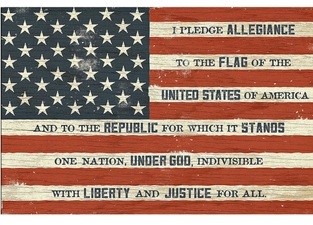
I choose “one Nation under God”
Unless otherwise indicated, all scripture passages are from the New Revised Standard Version Catholic Edition (NRSVCE) New Revised Standard Version Bible: Catholic Edition, copyright © 1989, 1993 the Division of Christian Education of the National Council of the Churches of Christ in the United States of America. Used by permission. All rights reserved.
Biblical languages inserts from Bible Hub (Bible Hub: Search, Read, Study the Bible in Many Languages) Visit at http://biblehub.com

Aloha Friday Messages by Charles O. Todd, III is licensed under a Creative Commons Attribution-ShareAlike 3.0 Unported License
[1] “God of our Fathers” is the National Hymn. Daniel C. Roberts wrote the lyrics in 1876, the Centennial of the United States. The accompaniment in this version was written later by George W. Warren in 1892. It has invoked strong sentiments of Patriotism ever since. Would to God that “We, The People of The United States of America” would learn to sing, take up, and live the lyrics in this majestic poem!







 Iscariot. Judas was told to go perform miracles, and he obeyed … initially. I have often wondered with which of the others he travelled. James and John bar Zebedee were brothers. Simon-Peter and Andrew bar Jonah were brothers. Thaddaeus and James bar Alphaeus may have been brothers (though not specifically named brothers in Scripture it seems; some speculate Thaddaeus – who is also called Jude or Judas – might have been James’ son). We have no way of knowing who paired with Judas Iscariot, though. Could it have been Simon the Cananaean who is also called “The Zealot?” When all twelve went out from Jesus, I’m sure they discussed what he had told them to do.
 Aloha nui loa, ʻŌmea! Let the word of Christ dwell in you richly; teach and admonish one another in all wisdom; and with gratitude in your hearts sing psalms, hymns, and spiritual songs to God. And whatever you do, in word or deed, do everything in the name of the Lord Jesus, giving thanks to God the Father through him. I want to begin today at the end. The end of the Mass, that is. I want to specifically address those persons who are frightened by the words, “LET US PRAY.” This usually is the first thing we hear after Communion. It is referred to in your missals as “Prayer after Communion.” We must assume that this is an alarming invitation. So many people are so upset by its approach that they leave the building immediately after they have received their portion of The Body of Christ.
 (nabiy’) {nah-bee’}. There are some disagreements among scholars about the origin of that word, but one that is well-accepted is that this noun comes from the verb noba’ meaning to “bubble up,” “boil over”,” as in “to pour forth an abundance of words,” such as those who speak with divine inspiration. It is by and through the power and inspiration of God that a prophet speaks, and a prophet can’t help but speak when and what God commands any more than a pot of boiling water can stop bubbling. And that is the key. Those who have Divine Inspiration are True Prophets. The converse is that those whose “inspiration” is self-generated are the False Prophets. How then can we tell the difference? If we look at the verses following Jesus description of wolves in sheep’s clothing, the answer is clear. (See
  I can answer that. We see what we believe. We hear what we believe. We believe what-we-do-not-know if we believe that seeing the Living Christ raised above the altar is NOT the True Jesus, alive and whole. When we read from the Prophets during the Liturgy of the Word, we hear the Voice of God telling us how to Live and Love as he commands – and he commands us to Live and Love
  so that we’ll LOOK at the miracle before us.
 knock Darth Vader’s ship off course before he can destroy Luke Skywalker’s X-wing fighter. Obi-Wan Kenobi – who sacrificed his life to allow his compatriots to escape – speaks to Luke from “The Force” to tell Luke to trust his instincts. Luke turns off his ship’s computer and somehow sends two torpedoes into an exhaust port on the Death Star. The Death Star explodes, thereby saving the Rebel Base. Obi-Wan’s voice reminds Luke that The Force will always be with him. The movie ends with Princess Leia giving Luke and Han medals (and promotions!) for their heroism. We know now that the Empire has suffered a setback, but there is still much to do. Now, does any of that ring a bell? If so, let’s imagine that about 10% of the people in the movie theater get up and leave right after the destruction of the Death Star so they can get out of the parking lot and over to Pizza Hut before the crowd. Years later, these same people bought the Blu-Ray disc and watch this movie multiple times, but always stop watching and eject the disc right after the Death Star explodes. Does that make any sense?
 Wisdom of Gratitude. That sort of Gratitude comes only in uniting our lives with Jesus’ Life. That, in turn, is accomplished only but remaining in constant Fellowship with Jesus. Like the servants in ages past, we must [1] find and cultivate the Joy of knowing Jesus as Lord and Master, [2] then we carefully learn to watch for, and respond to, all the signals and miracles he shows us during that fellowship, and [3] we must eagerly lean forward in to the future and continue to prepare for and respond to any and every opportunity to intensify that Fellowship.


 the reading from 1 Corinthians because walking on the water was certainly something new! Here’s a little illustration about walking on water. In the Bible only Jesus and The Apostle Peter walked on the water, but
  “Facing into the wind? That doesn’t make any sense.” The purpose is to keep the bow facing into the wind and waves so that the boat will not capsize. Why would I put something in this essay about a sea anchor? Because often times the best way to deal with chaos is to face it head-on. Curling up in a corner like a whimpering child is probably a close antithesis to that. There’s another aspect of this that we could attribute to the Captain of our ship –
 water?” He replied, “Because your enemies can’t swim.” Same-same, yes? We’ve all heard the adage, “If God will bring you to it, God will take you through it.” Do we really believe that, I mean, really-really? I DO! Because it has happened to me. You have probably experienced that in your life as well, que no? And what happens when El Shaddai-Olam saves our skin? You know the answer! EVERYTHING CHANGES! So if anyone is in Christ, there is a new creation: everything old has passed away; see, everything has become new! When we are in Christ, we share in his victory; we are
 The Prophet Ezekiel authored the first of our Key Verses. This is the Period of the Exile when King Nebuchadnezzar captured and deported the King of Israel, Jehoiachin, and Ezekiel is describing how God’s Absolutely Perfect Plan will ultimately restore the People to their homeland and their Temple. But, first he will allow everything he had given them to be destroyed and desecrated. Nevertheless, the restoration will be directed and accomplished by God, not by them. God will do what needs to be done (as he has done, and will do, eternally). They made up their own way to worship and it was false. It was sinful. It was deadly, because … the price of sin is death. God uses the images of trees to convey that he alone can choose what to restore and where and how it will be restored. Then, he follows up with I the Lord have spoken; I will accomplish it. ʻŌmea, if God created all the universe with just a few words, then we should be able to understand that what God speaks happens. Everything from radiolarians to roses exist because of him. Could any of us make either of those?