2521AFC052325 – Do the right thing, again. 😀 ← PODCAST LINK
Read it online here, please. And please – when you visit there – use one of the social media links at the bottom of the page to share this post. Thank you! And remember, we now have a READER VIEW available, so share this link or this email often.
Do you know someone who enjoys Bible study, or who might like to read this? Ask them to email us or to subscribe on our blog-site.

John 14:23 b–24 – 23 b “Those who love me will keep my word, and my Father will love them, and we will come to them and make our home with them. 24 Whoever does not love me does not keep my words; and the word that you hear is not mine, but is from the Father who sent me.”
Acts 15:1-2 – The Council at Jerusalem
1 Then certain individuals came down from Judea and were teaching the brothers, “Unless you are circumcised according to the custom of Moses, you cannot be saved.” 2 And after Paul and Barnabas had no small dissension and debate with them, Paul and Barnabas and some of the others were appointed to go up to Jerusalem to discuss this question with the apostles and the elders.
Psalm 67:1-2 –
1 May God be gracious to us and bless us
and make his face to shine upon us, Selah*
2 that your way may be known upon earth,
your saving power among all nations.
*Selah: Psalm 67 includes a petition for a bountiful harvest (Psalm 67:6), made in the awareness that Israel’s prosperity will persuade the nations to worship its God. A popular Catholic Bible commentary addresses Selah thusly regarding its appearance in Psalm 3:2
At the end of this verse, Hebrew text adds, Selah, and the Septuagint (LXE) διαψαλμα, a word which is not much better understood. … St. Jerome expresses it semper, in his Hebrew version. It would perhaps be as well to leave the original term. … It occurs seventy-one times in the psalms, and thrice in Habacuc. Some think it is a sign to raise the voice, or to pause, etc. at the end of the lesson [or phase], before the psalter was divided. [1] I have always considered it as an imperative to pause and reflect reverently on the preceding poetry.
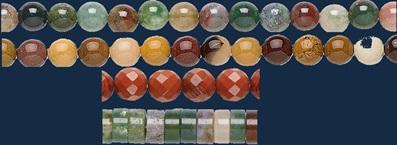
Revelation 21:10-11 – 10 And in the Spirit he carried me away to a great, high mountain and showed me the holy city Jerusalem coming down out of heaven from God. 11 It has the glory of God and a radiance like a very rare jewel, like jasper*, clear as crystal.
*In biblical symbolism, chalcedony is associated with purity, clarity, and spiritual insight. Jasper can take on many beautiful colors and patterns. Here are some examples.
I pray that the God of our Lord Jesus Christ, the Father of glory, may give you a spirit of wisdom and revelation as you come to know him. It is so easy for us to be wrong, but sometimes it seems so wrong for others to be right. I remember getting into a confrontation with my teacher in the second or third grade about the placement of a comma in the number “2500.” She had taught us the “tens, hundreds, thousands” rules. Back then, I knew “’t’ain’t necessarily so.” My dad always spoke it as “twenty-five-hundred-dollars,” and so I knew that comma should be placed in the center of the number – like this: 25,00 – and since my dad knew “everything one could know about math,” that had to be an acceptable (albeit alternative) answer. I ended up in the principal’s office calling my dad at work to get his absolutely true and valid testimony that I was right. Except, I wasn’t, and that was a very hard lesson for me to grasp. As I recall, I had to apologize and take a Zero on the exercise. It was hard and expensive to be wrong and then be arrogantly insisting on my presumptive expertise about it.
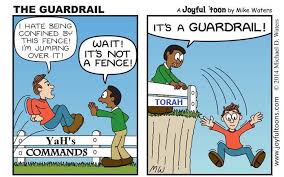
That’s kinda like what was going on in our reading from Acts 15. Some chaps, who were influenced by Pharisees and some Traditionalists, started telling the gentiles they had to be circumcised to be saved through Jesus’ followers in The Way. Well, that wasn’t received well at all. It turned out to be a case of presumptive expertise similar to mine. The point was argued locally, it was referred to a higher authority (the Apostles no less!), consensus was achieved, and we imagine apologies were issued, and that was that. It was also the First Church Council. Councils are convened so that the Church can make use of the cumulative wisdom of the Apostles and Presbyters and the Teaching Authority of the Church. Over the millennia, many Councils have been convened to help the Church discern the Right and Proper position she should take on matters which arise and can cause confusion and dissent. These decisions are then shared with the faithful as protections to ensure we are all “in bounds” and safe from error. In 2446AFC111524 – This is a Big Deal!, we used this cartoon to illustrate the point. Sometimes (often?) what we think is right because that’s the way we want it is dead wrong. In fact, it’s a lot like telling God “No thanks. I know what you want, but I’ve got this. I don’t want to do what you want. I want to do what I want. I want what I want when I want it. I know it’s the wrong thing, maybe even evil … but I still want it even if YOU don’t!”
Fortunately God’s guardrails are literally all over the place! Often they are in the counsel of loved ones or persons in deemed authority. Sometimes it’s in the Bible. Sometimes it’s in the government’s legal system. We all know people who are not always right but never known to be wrong (in their own minds!). Whenever we are the ones who stir up that sort of situation, it’s a good time to take a Selah, a nice little pause to let reality come back into control so we can think things through, get some advice, or – best of all – pray our way through it. As the adage says, “When things get tough it’s time to give God a little P.U.S.H. – Pray Until Something Happens.” Prayer is the default method for asking for, and accepting, God’s help. A lot of times we forget that second part – accepting God’s help. And once we have his help, it’s nice to say “Thank you, Lord. (↔ Music Link) ”We stay stuck to that insolent “I do it myself!” like any three-year-old. It takes discipline to remember that, and then to act like that. Hmmm. Maybe that’s part of the role of discipleship?
I want to draw our attention briefly to the Psalm Key Verse today. I see it as an echo of the Aaronic Blessing found in Numbers 6:22-27:
The Lord bless you and keep you;
The Lord make his face to shine upon you, and be gracious to you;
The Lord lift up his countenance upon you, and give you peace.
Whenever and wherever God blesses us – whether through the ministrations of his ordained, through the counsel of friends, or through the civil enactments of those placed in authority over us – doing the right thing is always to bless others in response to the blessings given to us. And since God blesses us in all things at all times in all places, it is always Right to do the Right thing. Our motivating disposition should always be to do the Right thing; however, we know that in our brokenness, we can expect to fail at that often.

Our failures are opportunities to turn around and go back. When I went back to my third-grade classroom, I was glad to be there, and glad I hadn’t been bumped off by the Cool Guys who mocked me when I left. Now, many times we hear someone say, “What’s the point of being good? Everybody just thinks you’re all stuck up or something, and they never stop taking shots at you. Look a Jesus. He was such a good guy, and look what happened to him.”
Ah, adelphos, we know that’s not the End of The Story. We have something to look forward to, something the Apostle John described: a great, high mountain and showed me the holy city Jerusalem coming down out of heaven from God. It has the glory of God and a radiance like a very rare jewel, like jasper, clear as crystal. I envision that like brilliantly-clear crystal with swirls and patterns of colors like a combination of the rainbow, the Aurora Borealis, and the most spectacular kaleidoscope ever imagined. I want to go there, be there, live there forever; and I want to see every single one of you there, too. It is remembering how to find that narrow road that gets to that beautiful place that seems to elude us.
I have found it elusive, too. “Lord! What am I gonna DO? I got lost again! HOW can I keep your Word when I keep losing my direction?!?” And our Lord comes back to us with this:
“Those who love me will keep my word, and my Father will love them, and we will come to them and make our home with them.Whoever does not love me does not keep my words; and the word that you hear is not mine, but is from the Father who sent me.” Here I am always reminded of the father who brought his son, possessed by an evil spirit which often tried to injure the boy, to Jesus asking for a cure … if possible. Here is part of that account from Mark 9:21-24 (GNT) [1] –
21 “How long has he been like this?” Jesus asked the father.
“Ever since he was a child,” he replied. 22 “Many times the evil spirit has tried to kill him by throwing him in the fire and into water. Have pity on us and help us, if you possibly can!”
23 “Yes,” said Jesus, “if you yourself can! Everything is possible for the person who has faith.”
24 The father at once cried out, “I do have faith, but not enough. Help me have more!”
In the King James Version I grew up with that came out “Lord, I believe; help thou mine unbelief!” Would not the same prayer be appropriate for love? “Lord, I love you, but not enough. Help me Love you more!” This Love is not just external cessation of things we know are wrong. It is a radical reorientation of our LIVES, a change that makes us a different, a true metanoia. Metanoia is that deep, complete conversion that Jesus often spoke about when he told us to Repent and believe the Gospel! We know why! YOLO-F!
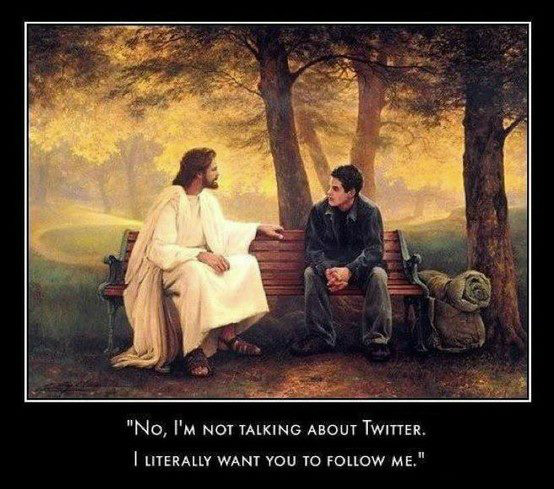
We must become that person who is another step closer to being like Jesus. That’s the process called conversion. You decide to change, to embrace “metanoia,” and then you place your faith in him. That’s conversion. (↔ Click Link) Once you experience conversion, you’re ready to follow him. Remember? “Come, follow me.”? (↔ Music Link) We can change our actions and behavior at least a little and if it doesn’t last long, we can try again, until we internalize the Love that makes those changes possible. When our sin becomes repugnant, then we see it more clearly, and then hunt it down and throw it out! By now we must surely know that this means metanoia – a conversion in one’s life that arises from penitence (sincere and effective sorrow), and doing “a 180” so that whatever transgression(s) arose, we choose to delete that poor choice – we will replace it with a better choice, one shown to us by Jesus himself.
Lately I have been learning that the most effective prayer I know is, “Jesus, please help me.” And whenever I shut up and listen, his help is there, and I have strengths I never saw and so am able – even in just a very small way – to do the right small thing with his Great Love. We must be patient with our sinfulness rather than grumpy which leads to procrastination. Instead let us pray, “create in me a clean heart O God. (↔ Music Link) We will do the right thing, again, and again, and … 😉
Whatever, whenever, wherever, whoever, however, if ever, forever —
at your service, Belovéd!
Please pray with us here at Share-a-Prayer.
Unless otherwise indicated, all scripture passages are from the New Revised Standard Version Catholic Edition (NRSVCE) New Revised Standard Version Bible: Catholic Edition, copyright © 1989, 1993 the Division of Christian Education of the National Council of the Churches of Christ in the United States of America. Used by permission. All rights reserved.
Biblical languages inserts from Bible Hub (Bible Hub: Search, Read, Study the Bible in Many Languages) Visit at http://biblehub.com

Aloha Friday Messages by Charles O. Todd, III is licensed under a Creative Commons Attribution-ShareAlike 3.0 Unported License
[1] Passages marked (GNT): Good News Translation (GNT) are from the Good News Translation® (Today’s English Version, Second Edition)© 1992 American Bible Society. All rights reserved. For more information about GNT, visit www.bibles.com and www.gnt.bible.
[1] George Leo Haydock, Haydock’s Catholic Bible Commentary (New York: Edward Dunigan and Brother, 1859), Ps 3:2–3.