2519AFC050925 – Be my Shepherd Lord 😀 ← PODCAST LINKB
Read it online here, please. And please – when you visit there – use one of the social media links at the bottom of the page to share this post. Thank you! And remember, we now have a READER VIEW available, so share this link or this email often.
Do you know someone who enjoys Bible study, or who might like to read this? Ask them to email us or to subscribe on our blog-site.
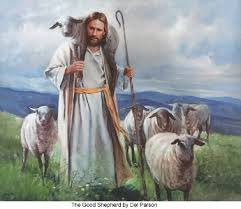
The Fourth Sunday of Easter is often referred to as Good Shepherd Sunday. We will not comment on the other readings for Sunday May 11, 2025 – the Fourth Sunday of Easter. It’s also Mother’s Day, so a special shout-out to my Dearest, Darling Wife, Crucita who agreed – oh, so many years ago! – to be my wife and the mother of our children:
HAPPY MOTHER’S DAY! And thank you for accepting the challenge of raising two kids while each of us worked full-time, pursued post-graduate educations, and still had time to travel and have fun together. You’re amazing!
Now, the Gospel for Sunday’s Mass is a short excerpt from the “Good Shepherd” narrative in the tenth chapter of the gospel of John. We might put that “Pile of Keys” image from last week here, because I’m going to put in the whole narrative – all 16 verses – from the (GNT) [1]
John 10:1-16 – 1 Jesus said, “I am telling you the truth: the man who does not enter the sheep pen by the gate, but climbs in some other way, is a thief and a robber. 2 The man who goes in through the gate is the shepherd of the sheep. 3 The gatekeeper opens the gate for him; the sheep hear his voice as he calls his own sheep by name, and he leads them out. 4 When he has brought them out, he goes ahead of them, and the sheep follow him, because they know his voice. 5 They will not follow someone else; instead, they will run away from such a person, because they do not know his voice.”
6 Jesus told them this parable, but they did not understand what he meant.
Jesus the Good Shepherd
7 So Jesus said again, “I am telling you the truth: I am the gate for the sheep. 8 All others who came before me are thieves and robbers, but the sheep did not listen to them. 9 I am the gate. Those who come in by me will be saved; they will come in and go out and find pasture. 10 The thief comes only in order to steal, kill, and destroy. I have come in order that you might have life—life in all its fullness.
11 “I am the good shepherd, who is willing to die for the sheep. 12 When the hired man, who is not a shepherd and does not own the sheep, sees a wolf coming, he leaves the sheep and runs away; so the wolf snatches the sheep and scatters them. 13 The hired man runs away because he is only a hired man and does not care about the sheep. 14-15 I am the good shepherd. As the Father knows me and I know the Father, in the same way I know my sheep and they know me. And I am willing to die for them. 16 There are other sheep which belong to me that are not in this sheep pen. I must bring them, too; they will listen to my voice, and they will become one flock with one shepherd.
Psalm 23 – A Psalm of David.
1 The Lord is my shepherd, I shall not want.
2 He makes me lie down in green pastures;
he leads me beside still waters;
3 he restores my soul.
He leads me in right paths
for his name’s sake.
4 Even though I walk through the darkest valley,
I fear no evil;
for you are with me;
your rod and your staff—
they comfort me.
5 You prepare a table before me
in the presence of my enemies;
you anoint my head with oil;
my cup overflows.
6 Surelygoodness and mercyshall follow me
all the days of my life,
and I shall dwell in the house of the Lord
my whole life long.
Today, I return to one of my favorite stories about kids and God. THE LORD IS MY SHEPHERD
A Sunday School teacher decided to have her young class memorize one of the most quoted passages in the Bible; Psalm 23. She gave the youngsters a month to learn the verses. Little Rickey was excited about the task but, he just couldn’t remember the Psalm. After much practice, he could barely get past the first line.
On the day that the kids were scheduled to recite Psalm 23 in front of the congregation, Rickey was so nervous. When it was his turn, he stepped up to the microphone and said proudly, “The Lord is my Shepherd, and that’s all I need to know.” Rickey was a living example of what happens when we ask, “Will you Shepherd me Oh God?” (↔ Music Link)
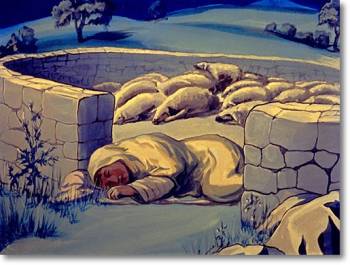
In the drawing above, you can get an idea of how a shepherd might protect his sheep by being the door or gate to the sheepfold. Most sheep folds were constructed of low stone walls, unroofed (although sheepcotes were sometimes sheds with roofs), and quite often circular. The shepherd could lay across the threshold or entrance of the holding pen and that way anything (or anyone) coming or going would literally have to pass by him. It was quite a security system. The shepherd was that gate and, one might also say, the gatekeeper (see verse 3).
The gatekeeper opens the sheepfold for the shepherd. In much the same way, the Holy Spirit opens the Church (the sheep and sheepfold) for the shepherd (The Word) to lead and protect. The sheep obey the shepherd who has conditioned them to know his voice. They know when that voice speaks there is safety for it is the shepherd’s leading that takes them to graze on verdant slopes and rest by running waters which are always fresh and clean rather than stagnant puddles and ponds. The shepherd values his sheep, so much in fact that he names them and calls them by their names much like we name our pets. But for shepherds in Biblical times – and most likely even today in herds not run by agribusiness – sheep are not just pets, and yet are more than just livestock. The sheep provided wool, leather, meat, and a sacrificial victim for important feasts and rites. Shepherds invested time and effort in caring for the sheep because they were a major component of their lives. They took care of the sheep because they needed the sheep; to fail to take care of them would be to abandon them. Scripture uses the imagery of sheep and shepherd to describe the relationship between Israel and Jehovah. Sheep are the most-mentioned animals in the Bible – at least 200 times – and the shepherds are often mentioned with them.
Do you remember who the first shepherd was in the Bible? Turn to Genesis 4:1-2 – Now Adam slept with his wife, Eve, and she became pregnant. When the time came, she gave birth to Cain, and she said, “With the Lord’s help, I have brought forth a man!” Later she gave birth to a second son and named him Abel. When they grew up, Abel became a shepherd, while Cain was a farmer. Abel was also the first victim of murder in the Bible. “Tending flocks” was usually a lonely job. One solitary shepherd might tend to a dozen sheep or several hundred sheep. Sheep are fairly obedient – although we tend to think of them as dim-witted and unwise – but they are easily spooked, too. When they are frightened their tendency to bolt makes it difficult to keep them under control. That is why the familiarity between the shepherd and the flock was so important. The shepherd definitely needed the sheep, but most certainly the sheep needed the shepherd even more. They depended on each other.
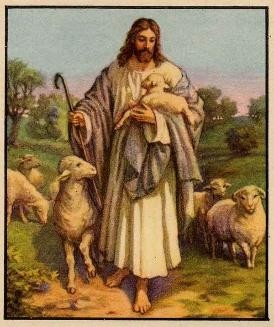
We also tend to think of sheep being driven, like other domesticated herd animals. But sheep are better led than driven. The shepherd is at the head of his flock. He goes where they are going and gets there before them. If they are going to the sheepfold, he enters first. If they are leaving, he exits first. If they are going to pastures for grazing, he finds those pastures. The sheep follow only the shepherd; they run from strangers; they panic when attacked by carnivores like wolves or lions. They form a sort of attachment to the shepherd – something like we do with our pets – and they are contented to remain in that relationship.
When the Psalmist says, “The Lord is my Shepherd, I lack for nothing” he is saying that he is in a one-to-one relationship with God, who generously provides for all his needs. God needs him and he depends on God. God loves and cares for him, and he in turn loves and serves God. God gives him peaceful, contented rest and renews his strength through healing. As a shepherd, God leads David (and us) in the ways of righteousness; his own righteousness and goodness keep us nurtured and safe. He shows us the goodness of a holy life. Even in the worst of times, David knows (as do we) that God will protect him from his enemies and strengthen him as well as his allies. He know his Shepherd’s protection will be effective and generous. He live in joyful hope As he contemplates being a member of God’s Eternal Family because his generosity extends even to the point of adoption as a sister or brother to his Only Begotten Son.
In fact, God’s generosity affects everything about David’s life (and ours). In the temporal things, God grants David such wealth and prestige that his enemies can only stand afar off and wish they could have it a tenth as good; David has the assurance of hope and protection. God has anointed him (and us) with a kingly consecration. At banquets the heads of guests were anointed with fragrant oil – sometimes also the feet were anointed – and that served as a sign of the wealth of the host and of the richness of his welcome to his table. In David’s song, he says his cup runs over; there is such an abundance of blessing that he cannot contain it all and so the blessings run from his life to the lives of others. God’s generosity is so superabundant that David’s generosity becomes more abundant (as should ours). David also understands that the abundance of those blessings of grace and faith and salvation is not just a one-time occurrence; it is continuous – so continuous that it is eternal.
When we see the term “The House of the Lord,” or “of the House and lineage of David,” we know that the word house means family. David states “I will dwell in the House of the Lord.” David is part of God’s family; so are we – by adoption in Christ Jesus. Because of our Good Shepherd, we are called by name to follow his Word and to dwell with him forever in the last and highest sheepfold – Heaven. All are called; few are chosen. Only those who answer that call know the voice of the Good Shepherd. Our Good shepherd leads us out of the sheepfold of evil in this world and calls us to follow him to verdant pastures and running waters – a life of blessed peace and joy without fear, without suffering, without death. He has lain down his life for us and – even better – he has taken it up again. So also shall he take up our lives. Psalm 95:7-8 – For he is our God, and we are the people of his pasture, and the sheep of his hand. O that today you would listen to his voice! Do not harden your hearts, as at Meribah, as on the day at Massah in the wilderness!
Through Baptism, we belong to the Good Shepherd, the Great Shepherd, but we also depend on other shepherds in our day-to-day lives. Our Pastors, Priests, and Rabbis are also part of God’s abundant generosity, part of the richness of his Table. The foretaste of that Banquet we receive at the hands of these consecrated and ordained ministers is what nourishes our spirits and makes our JOY overflow while the enemies of God can only watch from afar. On this Good Shepherd Sunday, take a minute to [1] thank God for the Shepherd who laid down his life for his sheep, and [2] thank the shepherd of the flock where you worship for the generous gift of their lives for your benefit.
In this present age, we often see that people opposed to the Church and to Jesus – or even worse, indifferent – often rise up in rebellion against the Body of Christ (that is, The Church) with blasphemies and persecutions, even martyring many who have chosen Christ (↔ Music Link) as their Shepherd. Let’s listen, then, to the Voice of our Good Shepherd as he calls us into verdant pastures with abundant, refreshing waters as well as safety and sumptuous provision for all our needs.
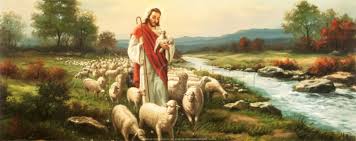
The Ideal Shepherd Isaiah talks about in Isaiah 40:11 is the Davidic Shepherd in Psalm 23, and in Ezekiel 34, especially Ezekiel 34:15-23. Isaiah portrays this shepherd carrying the lambs with tenderness and care. Little lambs have a lot of energy, but they also tire easily. When they are moving with the flock as they graze, the little guys sometimes get tuckered out and just can’t go any farther. The good shepherd will pick up that little one and carry it for a while so it can rest without being left behind. As for the ewes, especially those still carrying their progeny, they must be led with care – slowly, with an eye toward safe paths, gentle slopes, adequate water, and gradually move the flock so as not to endanger their lives. When Jacob and Esau were going through the process of reconciling with one another, Jacob makes a comment that driving the herd hard would kill the future of the herd – the ewes and the lambs they carried. Here’s the thing: If there are bleating, hopping, stumbling, messy, cute little lambs around, they are the future of the herd, and there will soon be more during the herd’s birthing season. Same for the Church.
If there are squalling, wriggling, falling, messy, dear little children around, they are the future of the Church as well as the present Church. Their participation in the Stewardship of Worship is an essential part of The Church of Today. Hopefully they do not come armed with Cheerios, toys, and crayons, and their parents help them appreciate orderly quietude. Soon enough they will bring their own children to Church. Jesus loves the little children. We too should love them and as unconditionally as he did. They are our seed, our dependents, our present, and our future. They are of our flock, and our Shepherd blesses them, and us, with his tender care. Jesus is the gate, and when we enter the Kingdom through him, we are saved because he laid down his life for us. That’s all; we need to know. Plant that in your heart and nurture it.
Whatever, whenever, wherever, whoever, however, if ever, forever —
at your service, Belovéd!
Please pray with us here at Share-a-Prayer.
Unless otherwise indicated, all scripture passages are from the New Revised Standard Version Catholic Edition (NRSVCE) New Revised Standard Version Bible: Catholic Edition, copyright © 1989, 1993 the Division of Christian Education of the National Council of the Churches of Christ in the United States of America. Used by permission. All rights reserved.
Biblical languages inserts from Bible Hub (Bible Hub: Search, Read, Study the Bible in Many Languages) Visit at http://biblehub.com

Aloha Friday Messages by Charles O. Todd, III is licensed under a Creative Commons Attribution-ShareAlike 3.0 Unported License
[1] Passages marked (GNT): Good News Translation (GNT) are from the Good News Translation® (Today’s English Version, Second Edition)© 1992 American Bible Society. All rights reserved. For more information about GNT, visit www.bibles.com and www.gnt.bible.