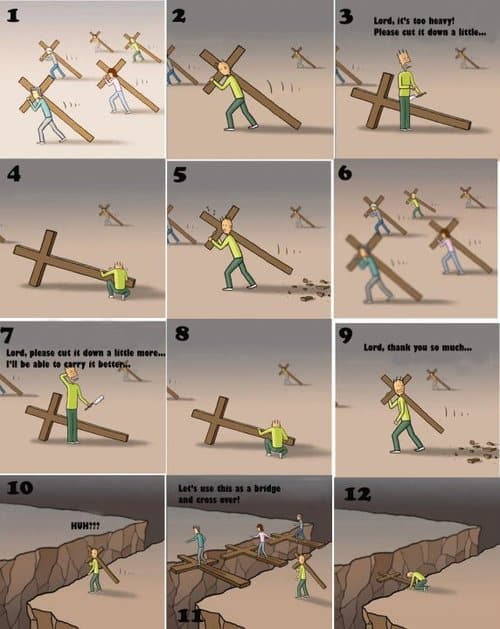
`2144AFC102921 – You talking’ to me?
Read it online here, please. And please – when you visit there – use one of the social media links at the bottom of the page to share this post. Thank you! And remember, we now have a READER VIEW available, so share this link or this email often.
 Mark 12:34 – 34 When Jesus saw that he answered wisely, he said to him, “You are not far from the kingdom of God.” After that no one dared to ask him any question.
May Peace always be with you and may God bless you, Belovéd! For whom is the Bible written? To whom does it belong? By whom was it created? In whom should it dwell? By whom can it be ignored? By whom must it be obeyed? Why must we know the answers to these questions? This is another difficult post. I cannot claim the audacity to call it prophecy, but I do say that the focus today will be on what God told us about consorting with impenitent persons who do not feel shame or regret about their actions or attitudes. This focus means that – if we are to listen to what God has told us through what Jesus relayed to us from God, his Father – we are going to hear much from Jesus and his Apostles, especially the Apostle Paul. I begin with the Q&A implied in the opening.
Q: For whom is the Bible written? A: For all created in the image and likeness of God.
Q: To whom does it belong? A: To all earthlings who are accepted as God’s chosen souls.
Q: By whom was it created? A: By the Holy Spirit who inspired God’s chosen earthlings to record his Word.
Q: In whom should it dwell? A: In all who love and reverence their Creator.
Q: By whom can it be ignored? A: Only by those who devote to any person or thing higher love and reverence than they give to God.
Q: By whom must it be obeyed? A: By all who are created in the image and likeness of God.
Q: Why must we know the answers to these questions? A: The objective of this post is to present the information that we will need to answer that question. Let’s begin with what happened just up the page from today’s Key Verse.
A Pharisee came forward and asked Jesus (paraphrasing here), “What is the most important of the commandments?” Jesus’ response is found in Mark 12:29-31 – 29 Jesus answered, “The first is, ‘Hear, O Israel: the Lord our God, the Lord is one; 30 you shall love the Lord your God with all your heart, and with all your soul, and with all your mind, and with all your strength.’ 31 The second is this, ‘You shall love your neighbor as yourself.’ There is no other commandment greater than these.”
Jesus begins by quoting the quintessential Jewish prayer, the Shema: Sh’ma Yis’ra’eil Adonai Eloheinu Adonai echad, and the First Commandment which is to Love the Lord (↔ Music Link) with our complete being. Belovéd, that is what God most desires and expects from every person. That command, that desire, that expectation is at the core of all Scripture. It is the convergence of all Laws, Covenants, Promises, and Divine Interventions recorded in the Bible. Love God. Love each other. That perfectly simple formula forms the framework for God’s Absolutely Perfect Plan (Yes, the APP, and we’re not done talking about that, either).

Now, where are we to make all of this Love happen? First in our hearts, the place where we honor everyone (and everything and everywhere) God has created and Gifted into our lives. Next, with our souls, the spiritual part of us that is most like our Father; it is the breath of life in us. God further inspired Moses to designate loving God with all our mind; our thoughts, aspirations, contemplations, prayers, worship – all centered and balanced on God. Lastly, with all our strength. That one is a little harder for us to understand these days. It means to love and serve God in a way that exceeds all else, and is vehement, intensive, diligent, and continuous. Nothing else in our lives should be given more energy and effort than loving and serving God in the ways and means which he has stipulated. The most important of these stipulations is that we are to Love God – who is Community – as community, more specifically as an ecclesial community defined as Church with apostolic succession and the accompanying Sacrament of Orders.
We’ve presented this idea before: The Church is the community called by God to his Christ for the purpose of becoming The Kingdom of God. The teachings Jesus gave to the Apostles and Disciples were given to and for THE CHURCH. When Jesus talks about offending, or serving, or aiding “a brother or a sister,” he is talking about believers – The Church, the citizens of The Kingdom. He is not talking about the World. We are to evangelize in the World, but we are not the live there, and the World is not to live in The Church! Now the next several paragraphs will be mostly Scripture – some quoting Jesus, quite a lot of it from the Apostle Paul.
Matthew 5:22 – 22 But I say to you that if you are angry with a brother or sister, you will be liable to judgment; and if you insult a brother or sister, you will be liable to the council; and if you say, ‘You fool,’* you will be liable to the hell of fire.
* ῥακά (rhaka) {rhak-ah’} Aramaic Transliterated Word from רִיק – “airhead”; useless; senseless numbskull.
This was likely a colloquial phrase the listeners would have known well. In the World, this would be an act of disdain and mockery. In The Church, this would be contrary to the two commandments stated above. Disdain, mockery, put downs – all these are products of pride and denials of the inherent worth of the person thus demeaned. THIS BEHAVIOR DOES NOT BELONG IN THE CHURCH, therefore, to remain in the community of Church we have three choices: [1] Repent and reconcile, [2] Leave the Church or be expelled, [3] Do not bring such a reviler into the community without first confirming repentance and reconciliation. Why do I say that? I will ask you a question first: What was Jesus’ first message to the World as recorded in Mark 1:15? Maybe you didn’t click on the link so I’ll tell you: “Repent and believe the Gospel.” Without faith, without community, without repentance and reconciliation, there is no Community of Church. I’ve addressed this before (↔ Click Link). But wait, there’s MORE.
The World is the hedonistic, godless, faithless mass outside the Church. The World has inverted the order of morality: Sins such as abortion, sodomy, euthanasia, and many other offenses against God and nature are now called “good”; and it’s a “sin”, according to The World, to oppose them. There’s an APP for that.
1 Corinthians 5:9-13 – 9 I wrote to you in my letter not to associate with sexually immoral persons — 10 not at all meaning the immoral of this world, or the greedy and robbers, or idolaters, since you would then need to go out of the world. 11 But now I am writing to you not to associate with anyone who bears the name of brother or sister who is sexually immoral or greedy, or is an idolater, reviler, drunkard, or robber. Do not even eat with such a one. 12 For what have I to do with judging those outside? Is it not those who are inside that you are to judge? 13 God will judge those outside. “Drive out the wicked person from among you.”
“But, Chick, it’s not my place to judge or correct another sinner trying to become a saint!” Of course it is! We have the right to attempt fraternal correction first! That is called Love and is included in the Spiritual Acts of Mercy: To instruct the ignorant, to counsel the doubtful, to admonish the sinner. Check out this link (Seriously, use the link so you can see this statement in context.) 1 Corinthians 6:3 – 3 Do you not know that we are to judge angels—to say nothing of ordinary matters? God is talking to us and we must listen, obey, and respond as he has commanded. “But if we did it as you describe it, the Church would be empty. We are all sinners. Will you exclude all of us?” If you think I might be exaggerating, check out Matthew 18:15-20. His Word says only the unholy and impenitent will be shut out. Remember that God shut the door on the Ark.
1 Corinthians 6:9-11 – 9 Do you not know that wrongdoers will not inherit the kingdom of God? Do not be deceived! Fornicators, idolaters, adulterers, male prostitutes, sodomites, 10 thieves, the greedy, drunkards, revilers, robbers—none of these will inherit the kingdom of God. 11 And this is what some of you used to be. But you were washed, you were sanctified, you were justified in the name of the Lord Jesus Christ and in the Spirit of our God.
Romans 1:26-32 – 26 For this reason God gave them* up to degrading passions. Their women exchanged natural intercourse for unnatural, 27 and in the same way also the men, giving up natural intercourse with women, were consumed with passion for one another. Men committed shameless acts with men and received in their own persons the due penalty for their error. 28 And since they did not see fit to acknowledge God, God gave them up to a debased mind and to things that should not be done. 29 They were filled with every kind of wickedness, evil, covetousness, malice. Full of envy, murder, strife, deceit, craftiness, they are gossips, 30 slanderers, God-haters, insolent, haughty, boastful, inventors of evil, rebellious toward parents, 31 foolish, faithless, heartless, ruthless. 32 They know God’s decree, that those who practice such things deserve to die—yet they not only do them but even applaud others who practice them.
*Them – the impenitent sinners who claim to be Christians.
Belovéd, we are all called out to prophesy against this rampant evil! (See Isaiah 5:20-21 again please. You can also find it here.) We all know what God has said, says now, and says forever: Zechariah 1:3b – 3 Therefore say to them, Thus says the Lord of hosts: Return to me, says the Lord of hosts, and I will return to you, says the Lord of hosts. (Lord of Hosts ≡ JEHOVAH SABAOTH – the uncontestable ruler of all Creation). Therefore I tell you this, the Word Our Triune God have bubbled up inside of me: The Church must not continue to condone the actions of people who regularly and uncaringly  commit those things which God has named as sin – the ones who not only do them but even applaud others who practice them. If we do not, we are also complicit in those sins because we have allowed our brothers and/or sisters to stumble. Why has God not returned to us? We have not returned to him (↔ Music Link), even in the Church. In the name of tolerance and inclusion we draw into our community impenitent sinners who bear the moniker of Christian but do live the transformed life of intentional Disciples. We have a representation of Pachamama installed in the Vatican, and many Catholics have misconstrued this as an act of idolatry (↔ Click Link – I strongly recommend that you read that article.) IT IS CERTAINLY UNUSUAL, but – as with every action by any person or group these days – there immediately arose detractors who had no standing in the discussion because their arguments were rooted in fallacies. That’s what makes dealing with this tsunami of evil – which has fully engulfed us now – so difficult to navigate. Why is that? It is because we who are Church are trying to navigate, understand, condone, and incorporate something that is not Church. How are we supposed to deal with that?
This is where all who follow Christ – not just Catholics, but all authentically-committed Christians (and that means to the exclusions of those who practice any or all of the acts listed above – to which I will add in all-caps SIMONY), must exercise the Spiritual Gift of Discernment. We have Scripture, Apostolic Tradition, and the Teaching Authority of the Church to rely on as tools for this discernment, and the latter two depend entirely on Scripture. Scripture is supported, clarified, revealed, and fortified by Tradition and Teaching Authority. When any of those three are misused, confusion arises, and that is the clear work of The Adversary. Again, I have said this before, but I am deeply concerned by this statement from Pope Francis I: The Eucharist “is not the reward of saints, but the bread of sinners.” His comment, it seems, is directed to persons who are attempting to make the Sacrament of Communion into a political foil – on both side of the issue. I would write the statement thusly: The Eucharist “is not the reward of saints, but the bread of REPENTANT sinners.” PLEASE visit (or revisit) The Eucharist and Propriety for more details. For now, scroll back up and look at the Key Verse again. Jesus saw that the Pharisee answered wisely – that is prudently, with discretion and knowledge of Scripture. “Go and do likewise.” Purge the evil from your midst.” God must certainly is talking to us – has been since the first lump of clay became a living soul. Some of us are listening, some of us are arguing about what and who is Church. One cannot expect to be sacramentally adopted into the Kingdom of God and still continue the acts condoned in the World, but condemned in Scripture, Apostolic Tradition, and valid Teaching Authority. HE hasn’t stopped talking to me about continuing to keep talking to you. Open up and be immersed in your B.I.B.L.E. so you continue to hear. It’s a feature of the APP. We are not far from the Kingdom of God when our answers are prudent.
Whatever, whenever, wherever, whoever, however, if ever, forever —
at your service, Belovéd!
Please pray with us here at Share-a-Prayer.
Unless otherwise indicated, all scripture passages are from the New Revised Standard Version Catholic Edition (NRSVCE) New Revised Standard Version Bible: Catholic Edition, copyright © 1989, 1993 the Division of Christian Education of the National Council of the Churches of Christ in the United States of America. Used by permission. All rights reserved.
Biblical languages inserts from Bible Hub (Bible Hub: Search, Read, Study the Bible in Many Languages) Visit at http://biblehub.com

Aloha Friday Messages by Charles O. Todd, III is licensed under a Creative Commons Attribution-ShareAlike 3.0 Unported License





 Trust the dust, Belovéd! God made it, and he doesn’t make junk. He used the dust to make you and me, and also to make Mary and Jesus. What Jesus did with the dust is something only God can do, and he did it in LOVE – so that no matter what else we do – his steadfast love stays with us to accept the Gift of Eternal Life with him. Why would any of us ever settle for anything less? I cannot answer that, Belovéd, but I can see and bear witness to the millions, even billions, who consciously, willingly, and foolishly reject that Gift. Pray for them! Their YOLO-F will be exactly what God has promised – as it will be for those who wisely accept the Gift of Salvation. Trust the Dust because that is God’s instrument for our return to him.
 time Jesus said it. Do we wish to become great? Is that better than being “not great?” If we are basically indistinguishable from everyone else, that’s not so great; that’s humiliating. Still, being humbled is great – God himself said so in
 Looking at our Key Verse and the image next to it, you may have guessed there is another bushel of Scripture headed our way. Since that’s the case, let’s ROLL! I’m sort of hoping you’re already ahead of me in knowing what I mean by “sharpen your sword.” Do you remember “

 “Eve was not taken out of Adam’s head to top him, neither out of his feet to be trampled on by him, but out of his side to be equal with him, under his arm to be protected by him, and near his heart to be loved by him.”

 In our first Key Verse, Moses is wishing that all the Lord’s people were prophets, and that the Lord would put his spirit on them! That way all the Lord’s people would be intimately connected with God and would be “a light for all the nations.” Obedience would be much improved, as would their love and respect (“fear of the Lord”) for God. Indeed, a nation, a society, even a Church or a family, so devoted to God would be a worthy ideal. But, we are sinners, and we simply are not able to consistently serve God properly. What is often surprising, though, is when someone seems to sort of “fall into” that role like Jonah. Sometimes that includes strangers not even named. In the passage from Matthew, the Disciples are all in a fit about someone who is “not us” doing what “only us” has been doing, and they are apparently doing it in Jesus’ name. (See


 Jesus asks the Disciples, “Who do you say that I AM?” The Apostle Peter comes back with the correct response – You are the Christ. You are the Messiah. Again Jesus tells all of them not to tell anyone else – yet. His revelation as Messiah is set for the time of his Passion, and it’s just days away, but it is not that day. Jesus tells them openly, frankly, and factually that he is going to die a terrible death. Next thing you know, The Apostle Peter is so pleased with himself for getting the right answer that he feels he can take Jesus aside and say, “Look Master, you can’t talk like that! Nothing that bad is going to …” Jesus breaks in with “Get behind me, Satan! For you are setting your mind not on divine things but on human things.” Now usually in my mind’s little movie theater, Jesus says that angrily, but actually I think he probably said it with sadness.

 This man was freed from what kept him “locked up” inside himself. He is referred to as “a deaf man who had an impediment in his speech; and they begged him to lay his hand on him.” Many of us have known hearing-impaired persons who have trained themselves to speak. The speech is understandable but not without distortions. We know, then, that he could communicate his inner thoughts and desires, but could not hear the responses to whatever he had spoken. He released his fear, fired up his faith, asked for and received Jesus’ help, and his life was completely changed. If we try to understand why Jesus used this unusual form of healing, we might not get any better answer than, “It was necessary.” The deaf man was in the presence of the
  When I read about what Isaiah saw – the Lord God on a Glorious Throne with Seraphim surrounding and praising him (In the Christian theological doctrine of angels, the Seraphim are the highest-ranking celestial beings in the hierarchy of angels), I sense the absolute awe he must have felt. From that magnificent throne room, God called out as in


 My Belovéd friends, we really do have a monster under our bed, but this one is not like the imaginary monsters that scared us as children. This monster is one that we try to make into a pet; but it’s a wild animal that will destroy us and all we have if we allow it to stay with us, to control us, to get in-between us and all that is Good. Those things are available to the Children of God through his Church, and we are told repeatedly that in that Church we are not to compromise with evil. Now, here comes a whole slew of Bible passages. Just read through them gallantly and then we can wrap this up. I want to start with how the monster was used to threaten Jesus and his Disciples during the Passion: